
Plugin Purpose
The plugin lets you implement quantity-based pricing to increase conversions and average order value. You can define flexible pricing tiers and clearly present volume discounts to your customers.
You can choose how pricing is displayed using tables, blocks, pricing labels, or dropdowns, and apply role-based or customer-specific pricing for B2B and advanced pricing scenarios. The plugin also includes features such as pricing rule import/export, cart upsells, minimum and maximum quantity limits, and quantity steps to help you fine-tune your pricing strategy.
It integrates seamlessly with popular third-party plugins like WP All Import, Elementor, product add-ons, and multicurrency plugins, ensuring smooth compatibility with your WooCommerce store.
Main Features
The plugin provides a variety of options to control the pricing of products in your WooCommerce
store. Here are the available options you can use to control prices:
Tiered Pricing
Tiered pricing allows you to set different prices for different quantities of products.
Out of the box, WooCommerce allows you to set only regular and sale prices. If you want to
control prices based on quantity, tiered pricing is the solution.
Please note
2 is the minimum quantity for which you can apply tiered pricing. Use regular or sale prices to control the price when customers buy a single piece.
There are two types of tiered pricing rules you can set up:
Fixed
Fixed (flat) prices per specific quantity.
For example, if you sell your product at $100.00, and you want to sell it for $90.00 if somebody
buys 10 pieces, and $80.00 for 20+ pieces, your pricing structure can look like this:
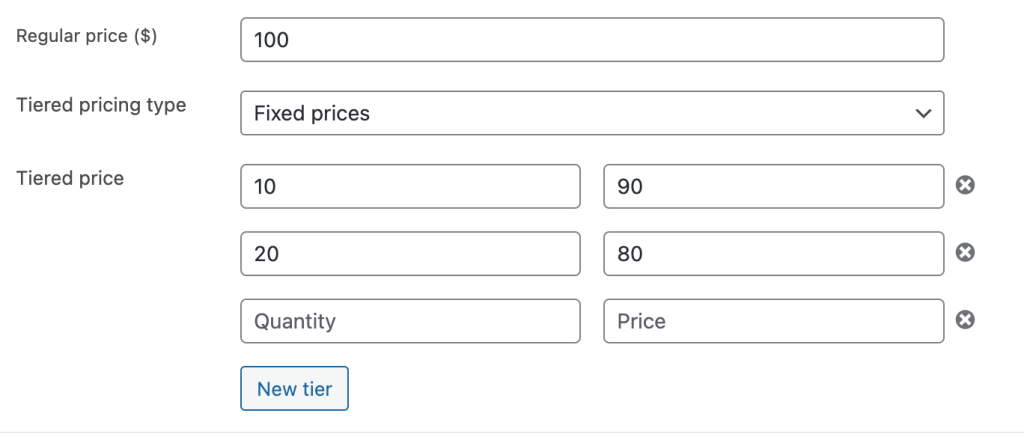
Please note that you don’t need to input the regular price into the tiered pricing rules.
Percentage
Similar to fixed tiered pricing rules, you specify a price for specific quantity breaks, but instead of
a flat price, you set a percentage discount based on the regular price.
For example, let’s create the same pricing structure as the previous example, but with a percentage
rules:
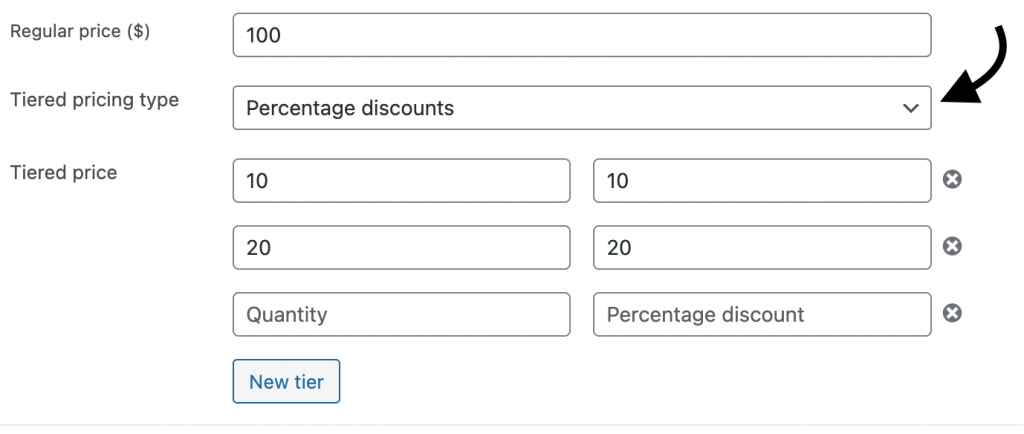
We now specify discounts instead of fixed prices, but the end pricing is the same: 1 – 9 pieces =
$100.00, 10 – 19 pieces = $90.00 (10% off), 20+ pieces = $80.00 (20% off).
Minimum Order Quantity
Represents the minimum amount of a product a customer must order to fulfill the purchase.
For example, you can set the minimum to 5, and customers will not be able to purchase fewer than
5 pieces:

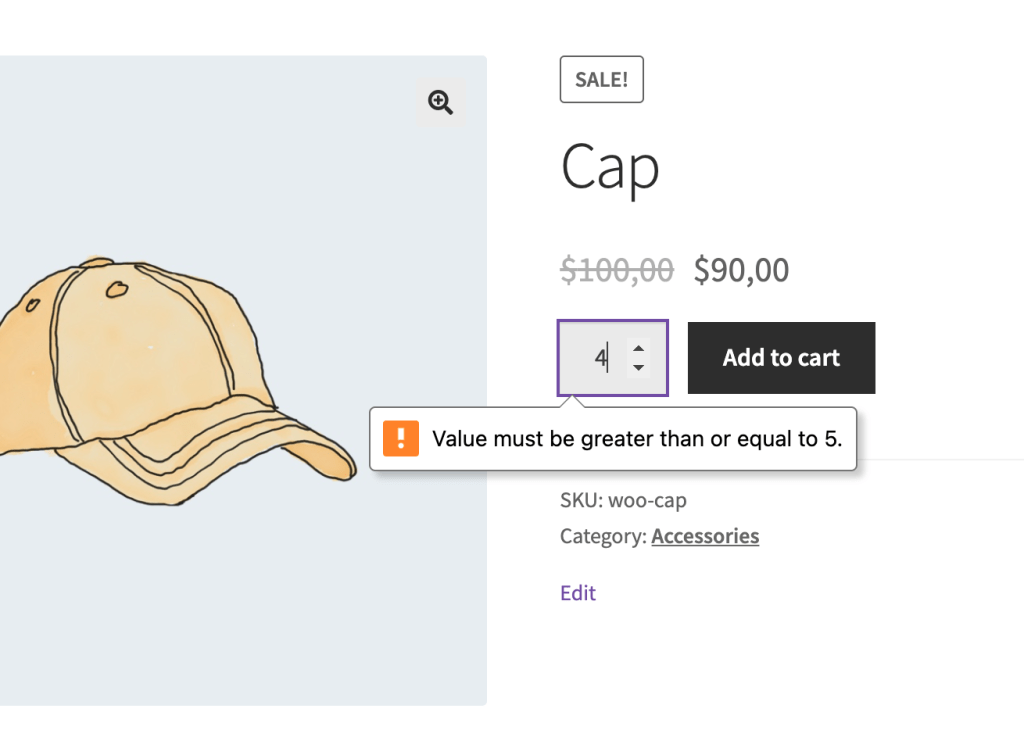
The quantity field will be pre-filled with the minimum value, and a notice will be shown if
Someone tries to add an invalid quantity to the cart.
You can use this feature with or without tiered pricing.
Notice
Please note that tiered pricing for the first tier
always uses the regular or the sale price. The first tier is built by the following logic:
[from minimum to first pricing rule minus 1] = regular price.
So, if you set the minimum to 10 and want your
pricing to look like:
- 10 – 19 pieces = $100.00
- 20 – 49 pieces = $90.00
- 50+ pieces = $80.00
The setup must be:
Regular price: $100.00
Minimum order quantity: 10
Tiered pricing rules:
20 = $90.00
50 = $80.00
Maximum Order Quantity
Represents the maximum quantity of the product a customer can order in a single transaction.
Similar to the minimum order quantity, the quantity field will be validated, and users will get
an error if they try to purchase an amount higher than the maximum.
Quantity Step
Requires the product to be purchased in multiples of X.
For example, if you set this field to 10, the product can be purchased only in quantities of 10,
20, 30, etc.
Role-based Pricing
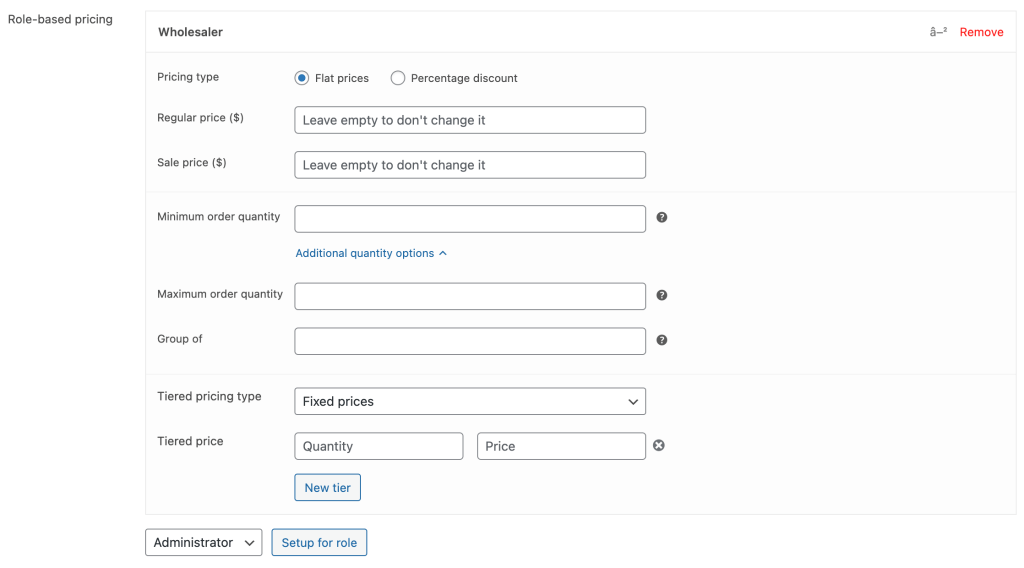
You can define custom pricing for any selected role and create as many rules as you need. Each role-based rule can have the following:
- Custom regular & sale prices or percentage discounts based on the original product price
- Minimum / Maximum / Group of settings
- Tiered pricing rules
Notice
Role-based rules have a higher priority. If you define
rules at the product level alongside role-based ones, and the user’s role matches a rule,
that rule will take priority, overriding all other fields.
Product Page
Tiered Pricing adds many features to the product page. All of them are customizable and can be
disabled separately.
Pricing Layouts
The most crucial part of the product page is the tiered pricing layouts.
By default, when you’ve set up tiered pricing, it will automatically display a pricing
table on the product page. You can control which layout to show on the settings
page or directly in each product in the “Advanced settings” section.
You can also control the position of every layout on the product page. Available positions
include:
- Above buy button
- Below buy button
- Above add-to-cart form
- Below add-to-cart form
- Above product title
- Before product summary
- After product summary
You can also choose “I display table via shortcode/Gutenberg/Elementor” if you
don’t want the plugin to display the pricing block automatically because you are displaying it
via a Gutenberg block, Elementor widget, or shortcode.
Each layout allows you to control the title and accent color.
Settings
This section covers available options that are common for all pricing layouts. For
layout-specific options, please check the corresponding subsection.
Quantity Displaying Type
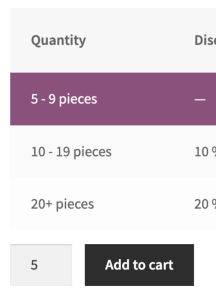
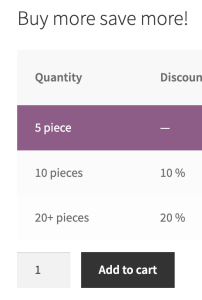
You can choose from 2 types of displaying quantity: Range or Static.
Ranges will show the range of quantity that applies to this pricing tier:
Static will only show the break quantities:
By default, the pricing layout will show ranges.
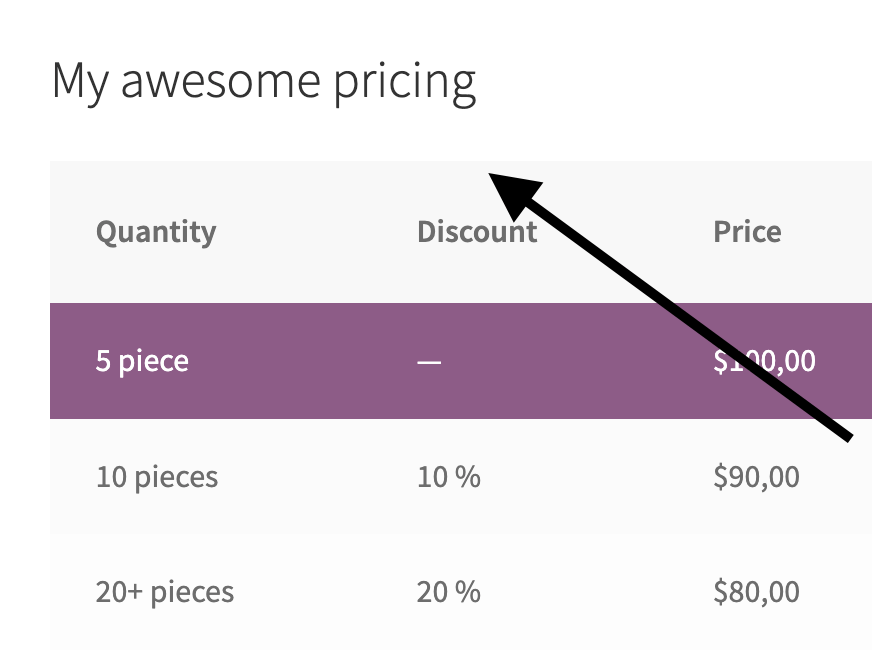
Pricing Title
The title shown above the pricing table/block.
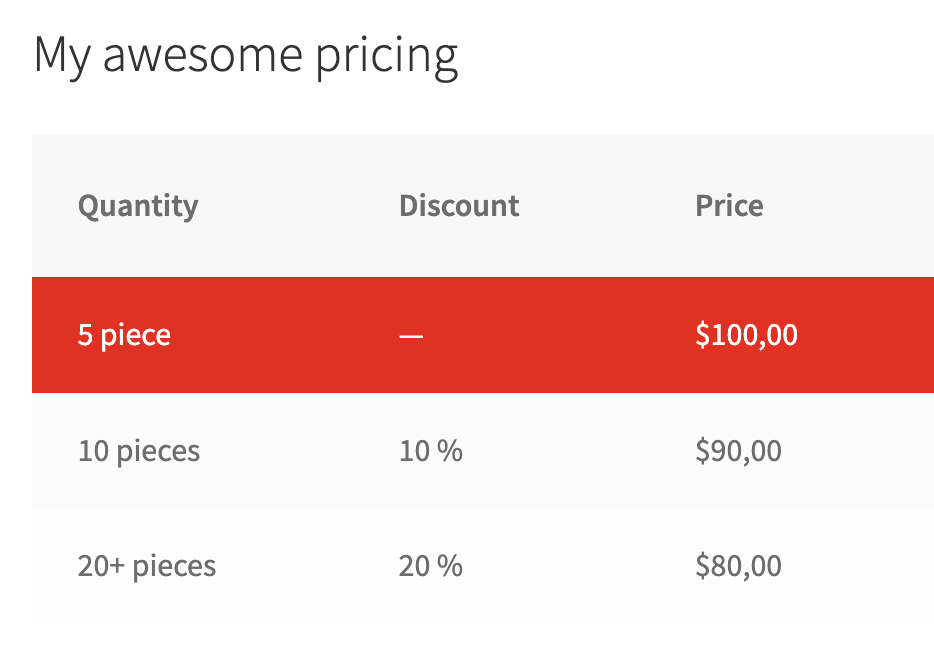
Active Pricing Tier Color
When users change the quantity, the corresponding table row, pricing block, or pricing option is
highlighted. You can choose the color of the active tier.
Clickable Tiered Pricing
If enabled, table rows, pricing blocks, and pricing options become clickable. When users click on
a tier, the plugin updates the product quantity field accordingly, and the tier becomes active.
Table Layout
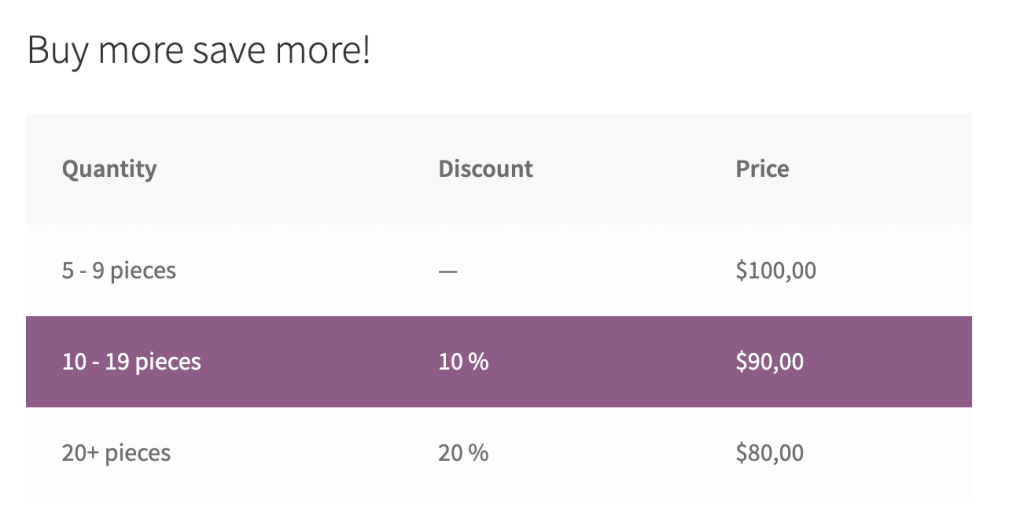
The table is the most commonly used layout. Available options include:
Columns
There are 3 default columns you can show or hide: Quantity, Discount, and Price.
You can also easily add custom columns:
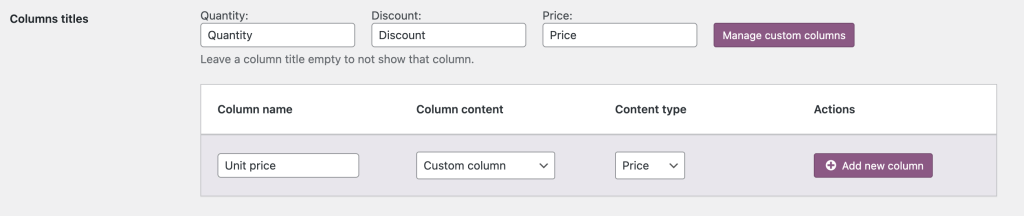
For example, if you want to add a “Unit price” column, create it in the settings, and a new input
will appear for each tier:
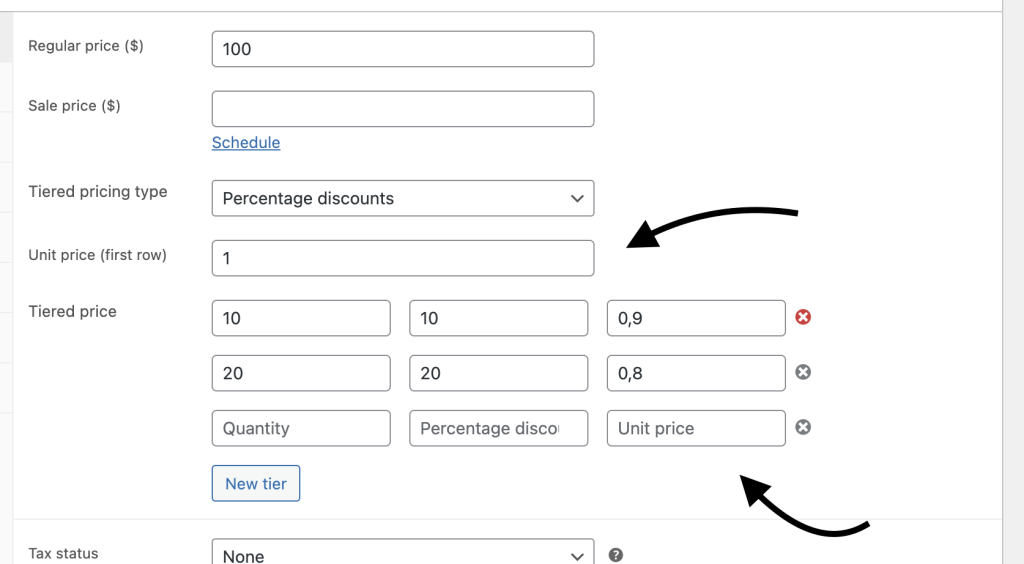
If “price” is chosen as the content type, the value will be formatted as a price. You can also
input text or numbers.
These new inputs also work for role-based and global pricing rules.
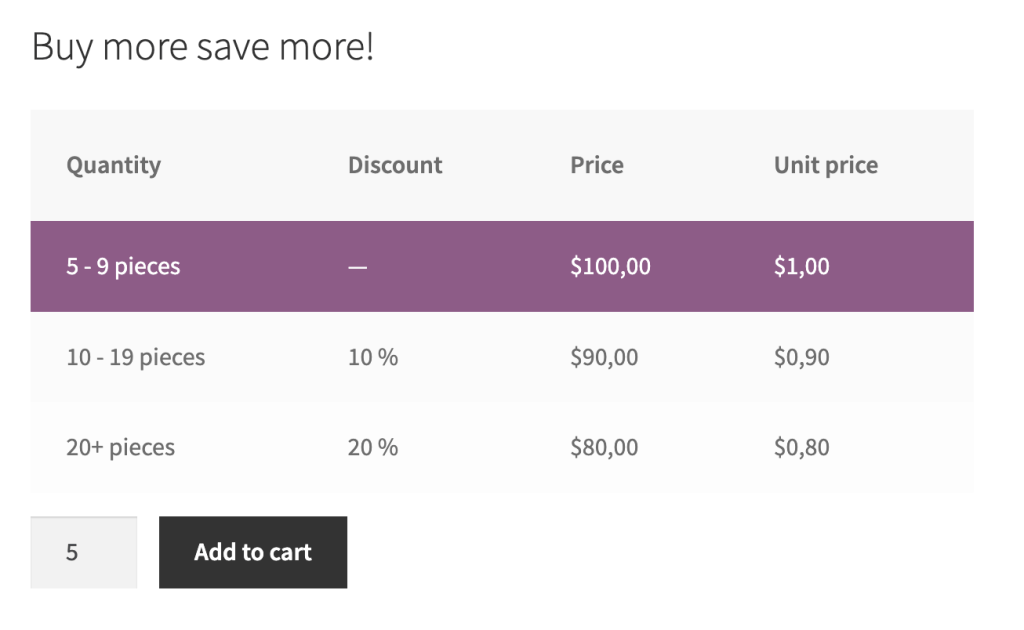
Dynamic columns available:
- Price excluding taxes
- Price including taxes
- Total row price
Base Unit Name
A base unit name is a unit of measurement for the base quantity. You can input anything from
“piece/pieces” to “bottle/bottles”.

The values will be added next to the quantities in the table:
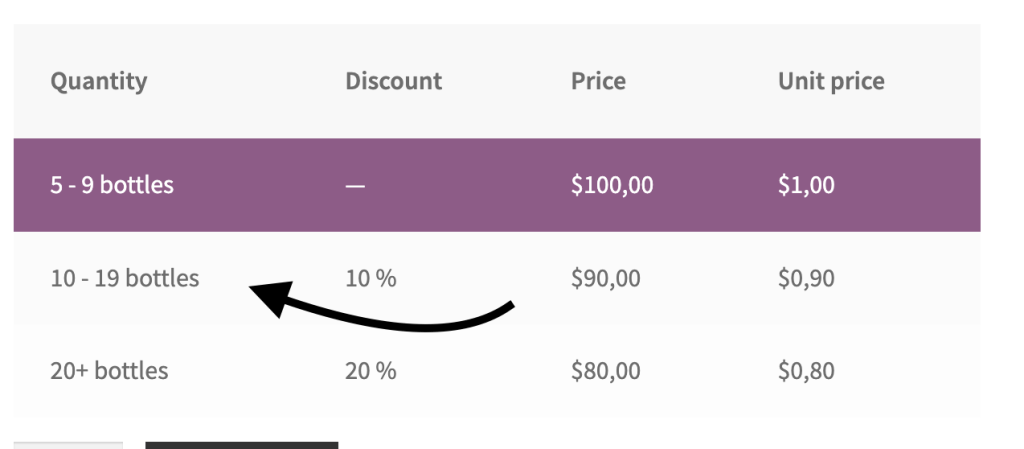
You can override these values per product in the “Advanced option” section.
Blocks Layout
Each tier represents a separate block with pricing and discount information.
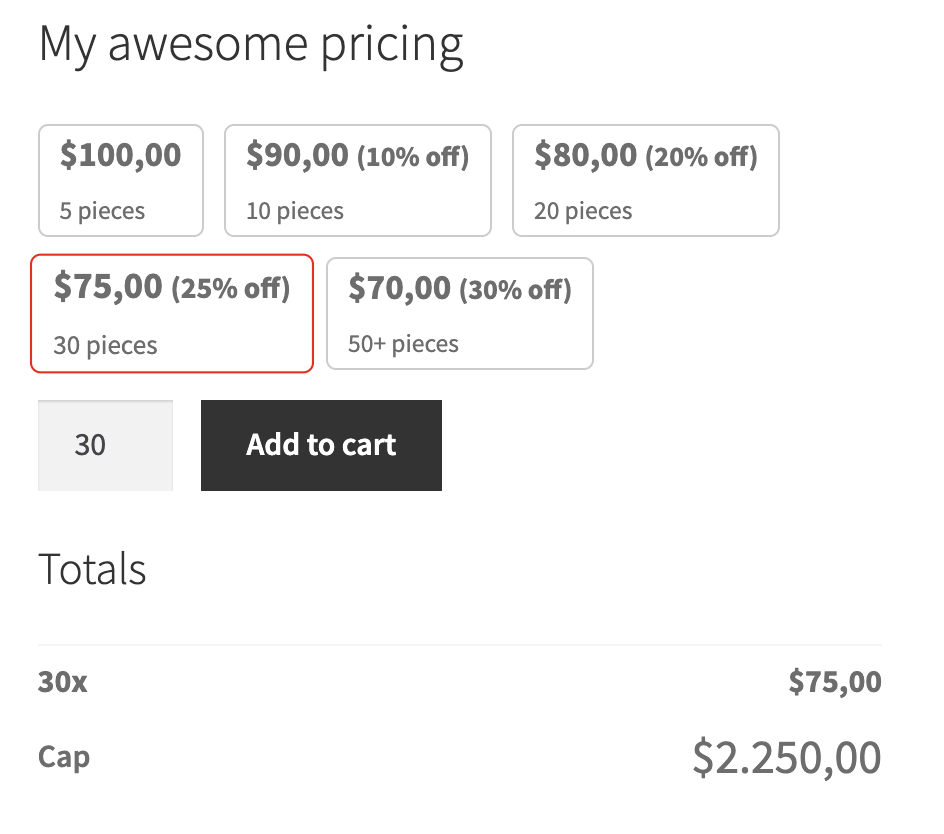
Options include Base Unit Name (similar to Table layout) and:
Show Percentage Discount
Show or hide the percentage discount label near the price.
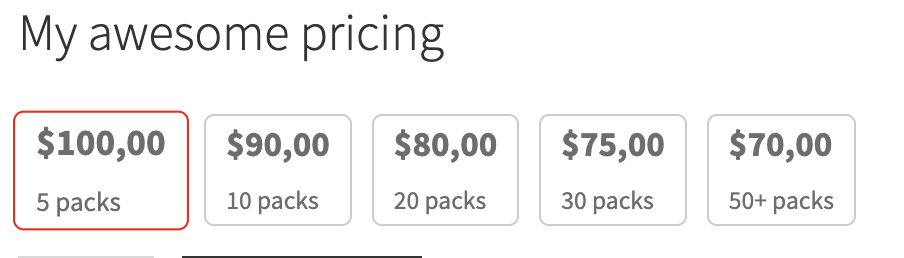
Options Layout
Each tier represents a separate option with a radio button.
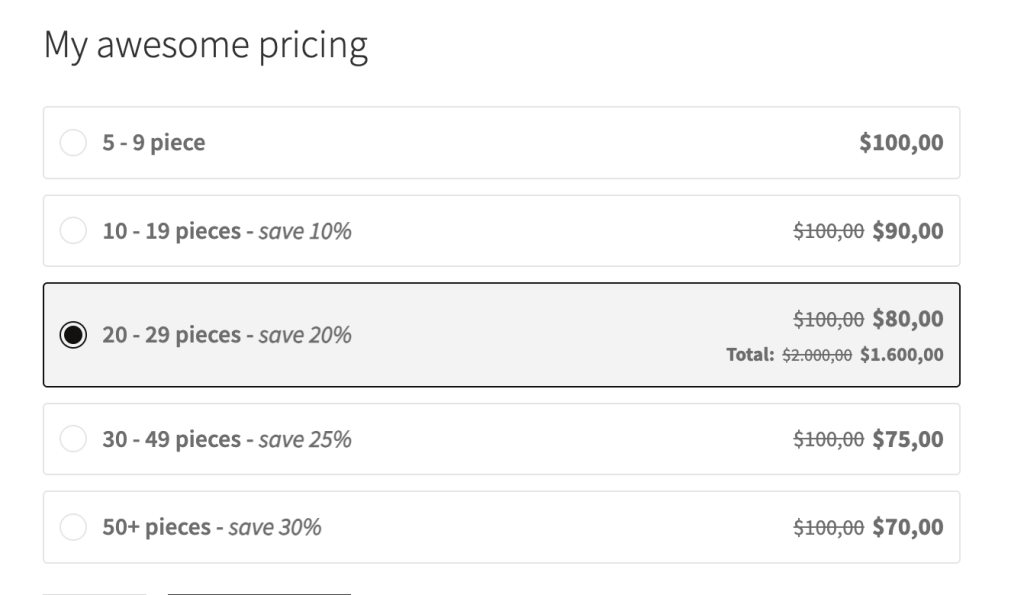
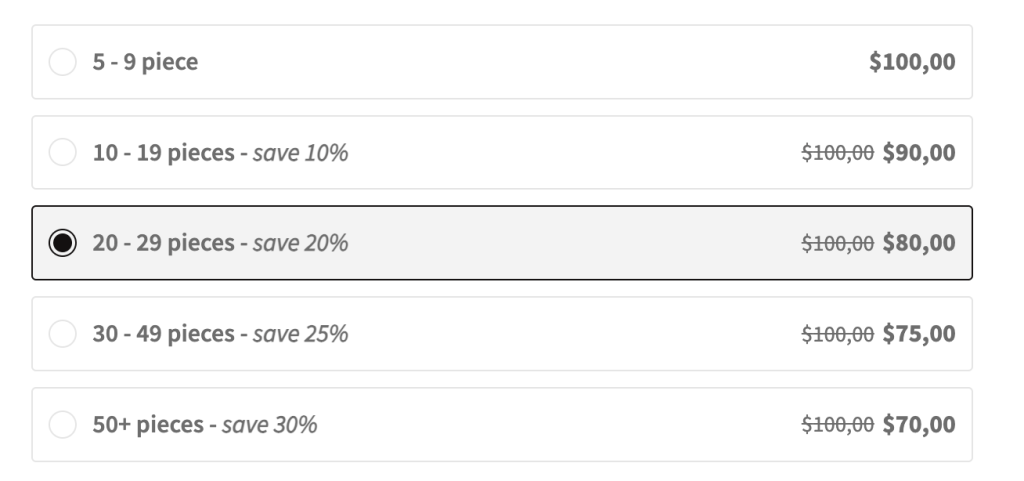
Show Regular Product Price
Show or hide a crossed-out regular price near the tier price.
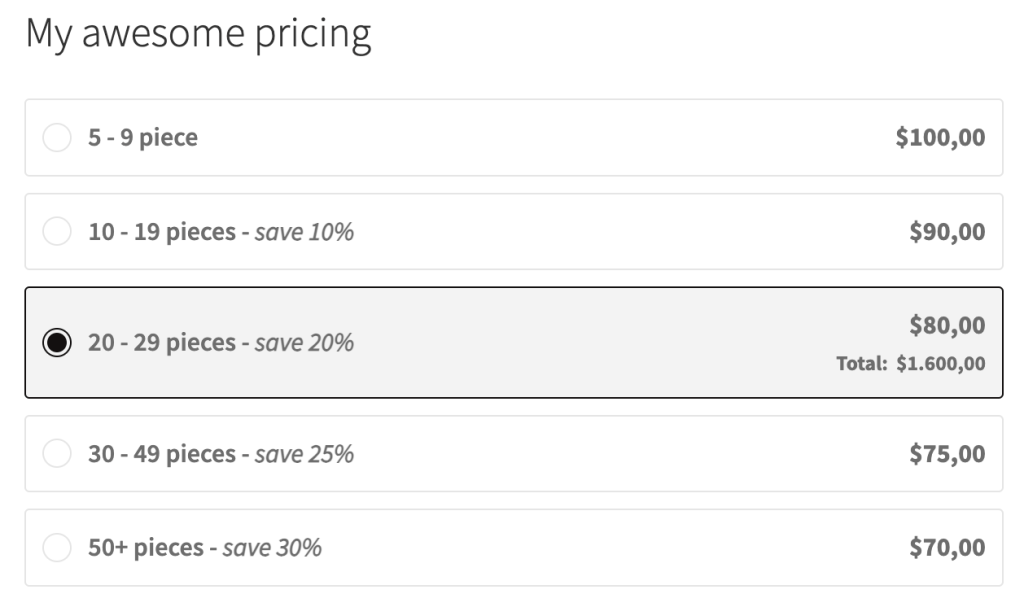
Show Total in Each Option
Display the total price for the quantity in the option.
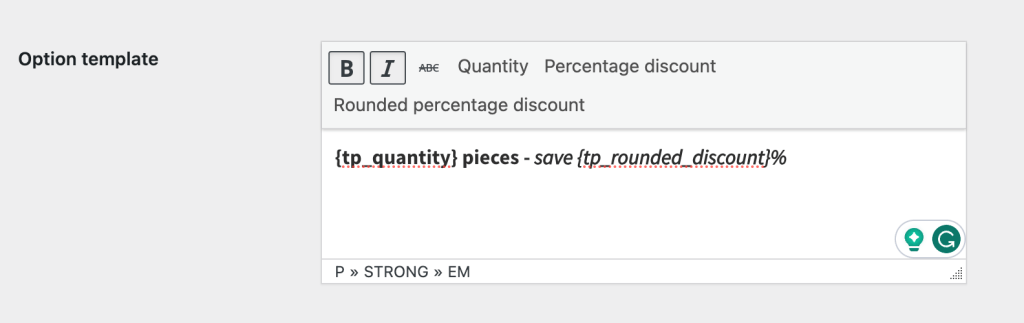
Option Template
Customize the text using variables: {{quantity}},
{{percentage_discount}}, {{percentage_rounded_discount}}.
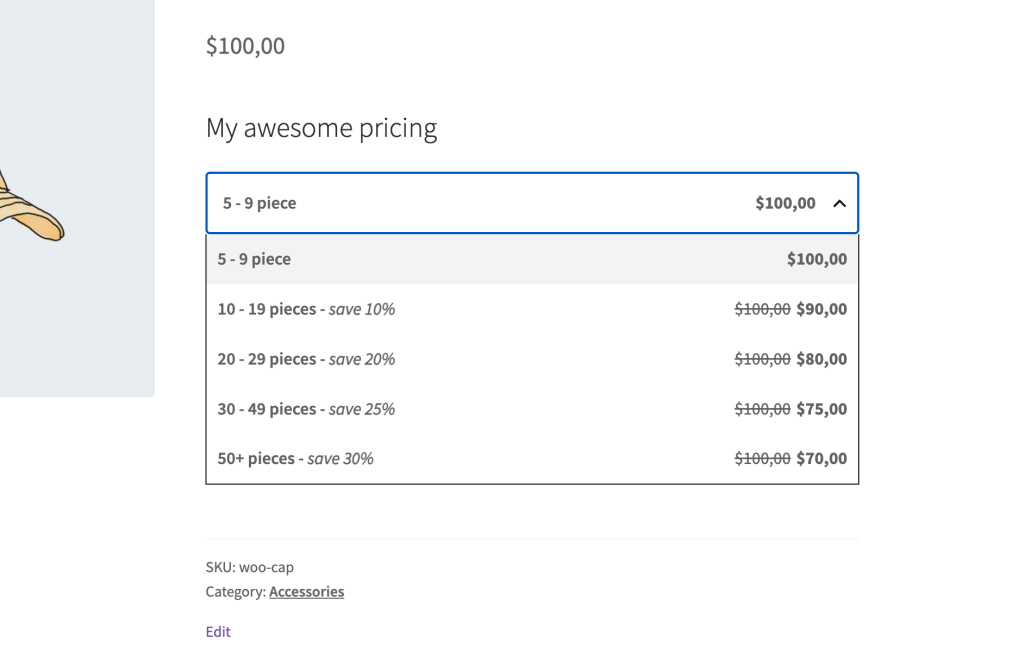
Dropdown Layout
An advanced selection for tiers, great for saving space when you have many tiers.
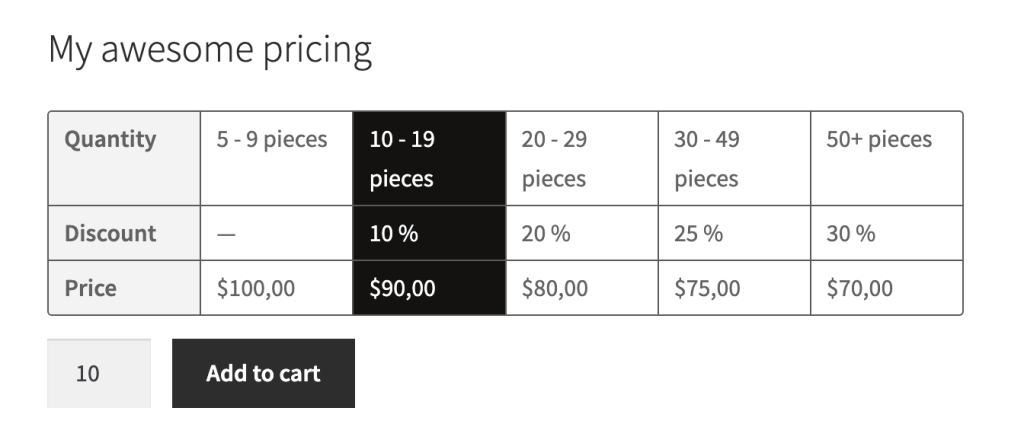
Horizontal Table
Reduces vertical space usage.
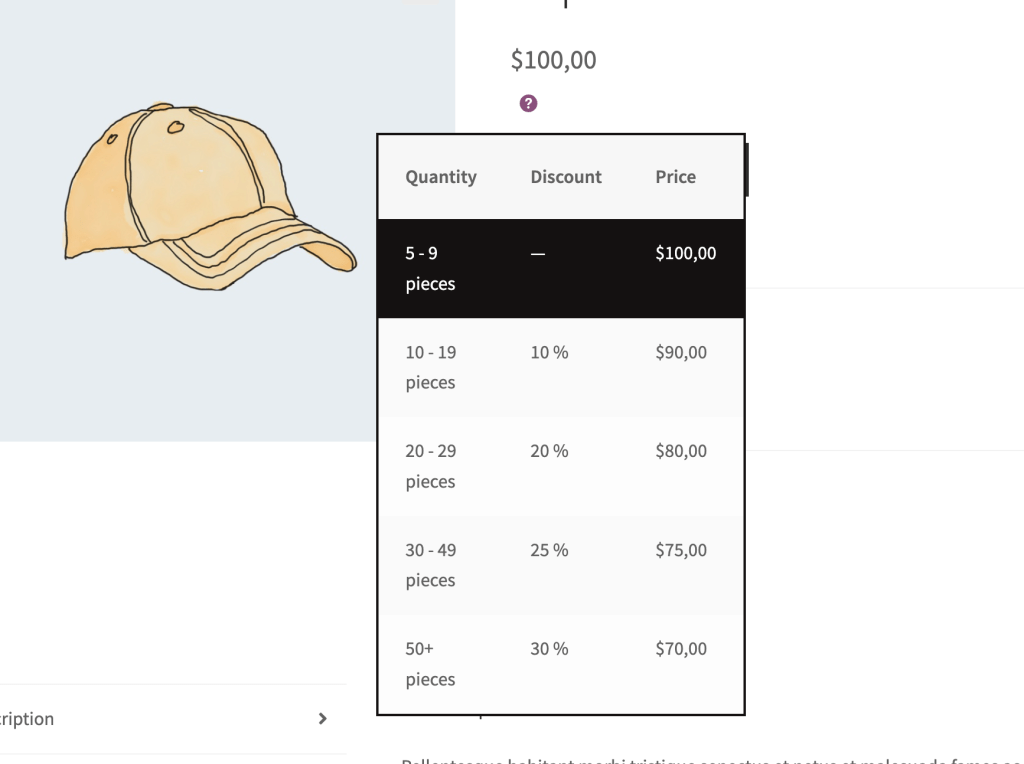
Tooltip
Shows the table layout on hover over the product price.
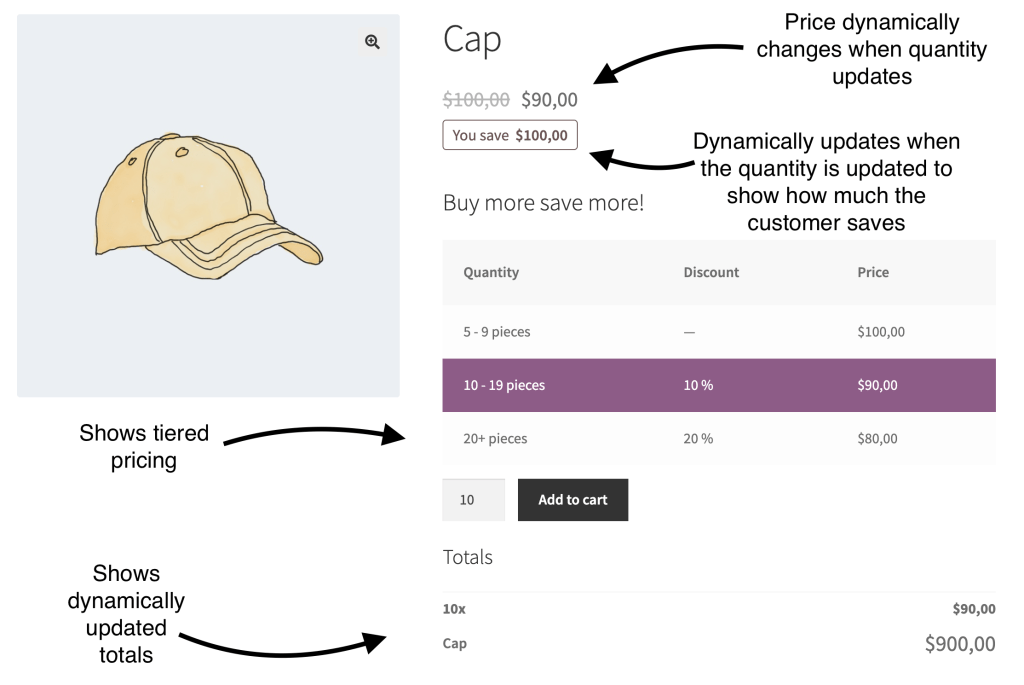
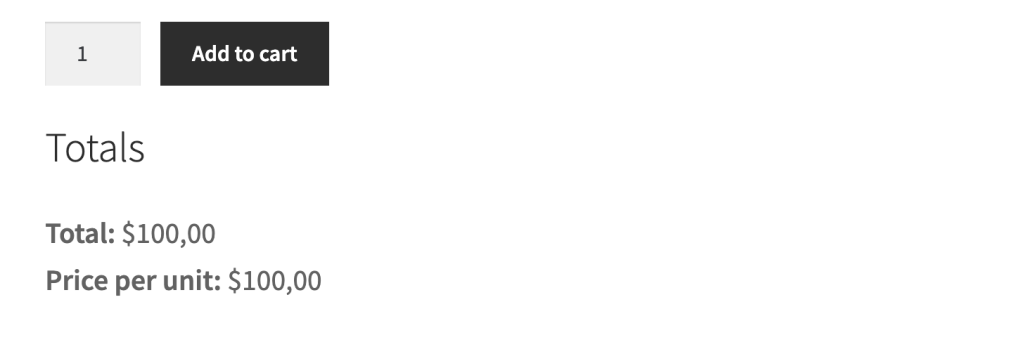
Totals
Totals immediately react to quantity changes and show actual prices. You can customize the title,
position, and template.
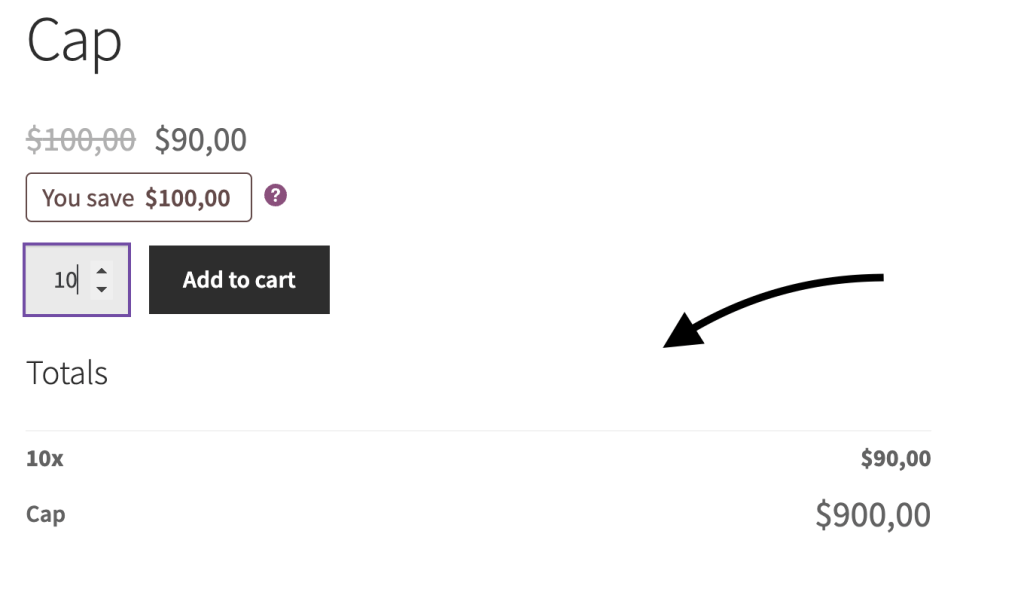
Customize “Price per unit” and “Total” labels with the second template.
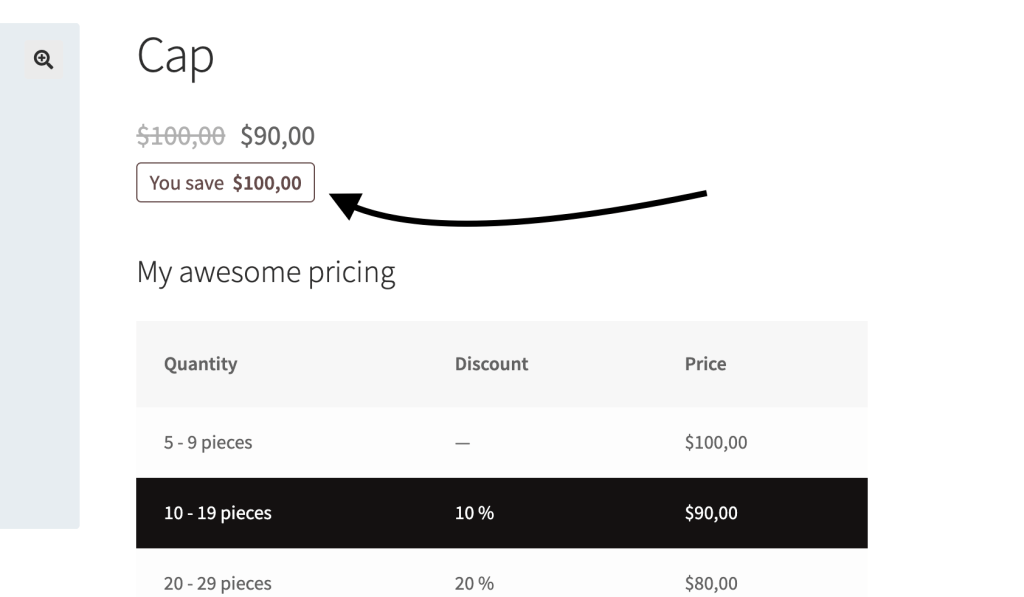
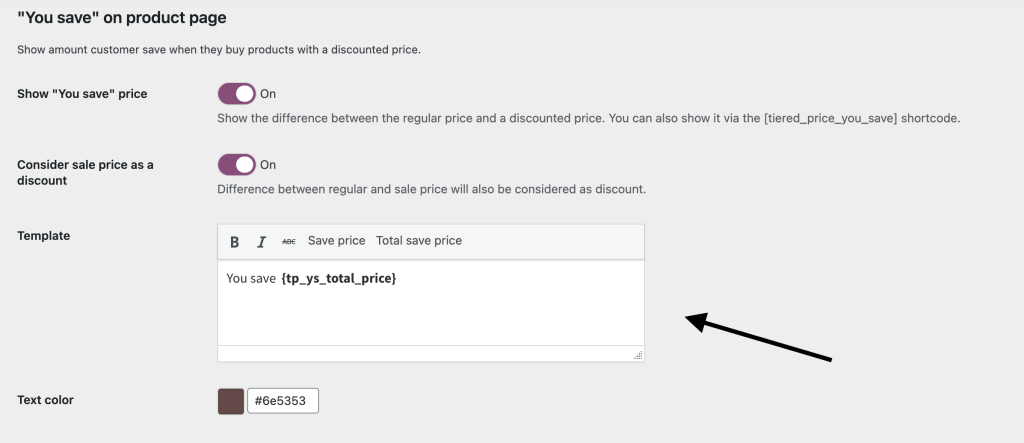
You Save
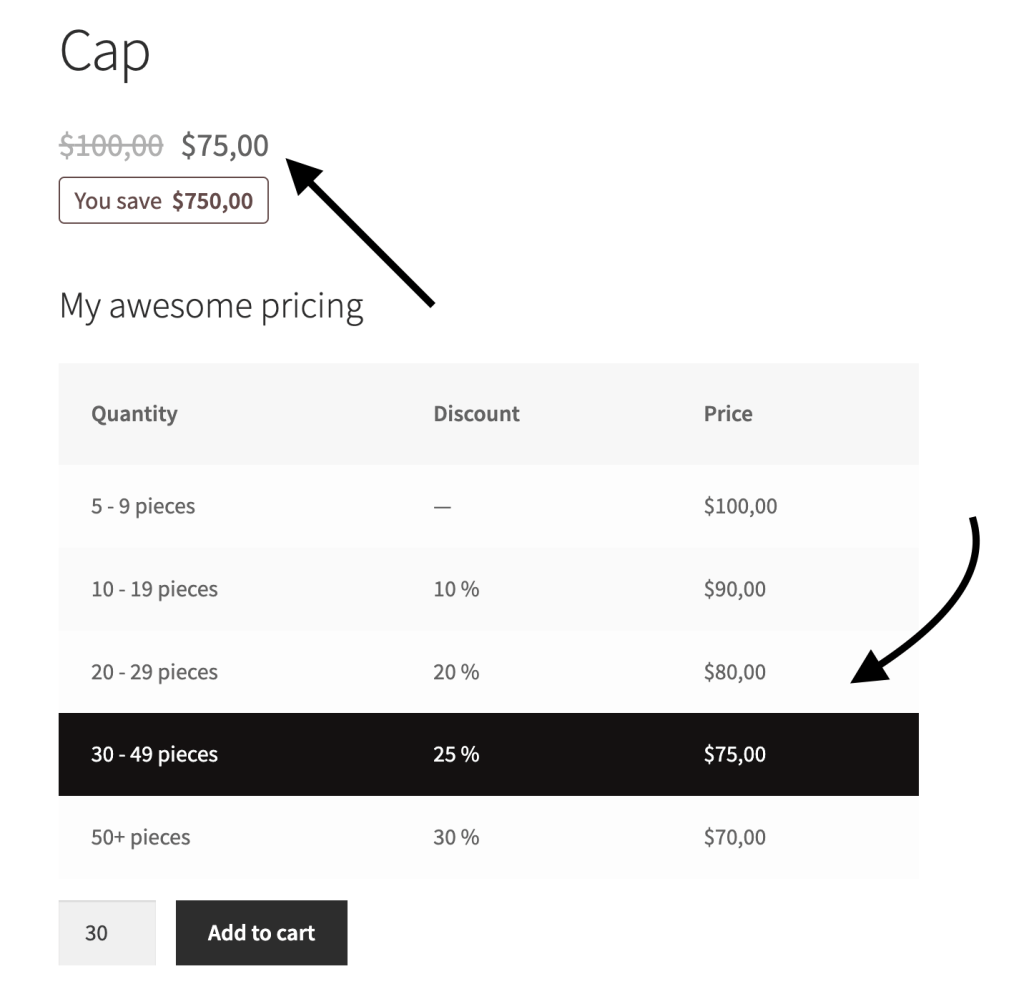
Shows how much the customer saves by choosing a specific tier.
Customize the template using variables: {{save_price}} (difference per unit) and
{{total_save_price}} (total savings).
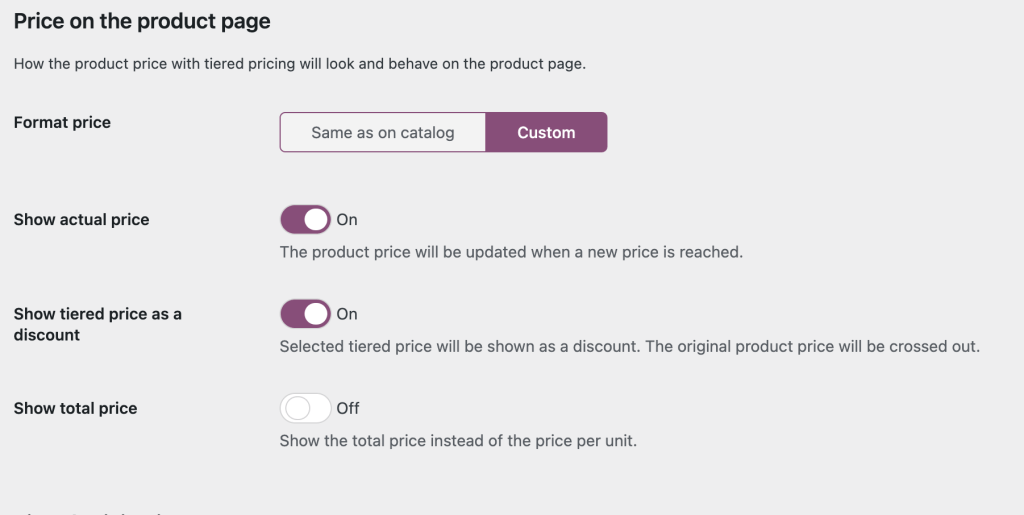
Dynamic Price
Control how the main product price behaves. It can remain static or become dynamic, showing the
total or actual tier price.
Catalog Prices
Show the lowest price or available price range on the product catalog when tiered pricing is
active.
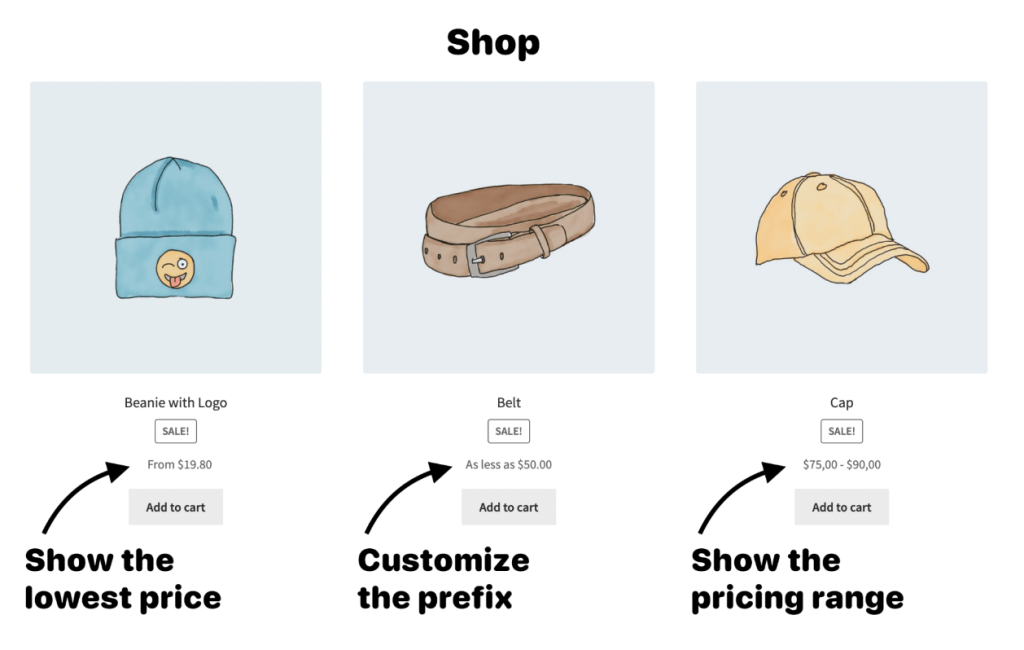
- Lowest price: Customize the prefix (e.g., “As low as $10.00”).
- Price range: Show prices from lowest to highest.
Tiered Pricing in the Cart
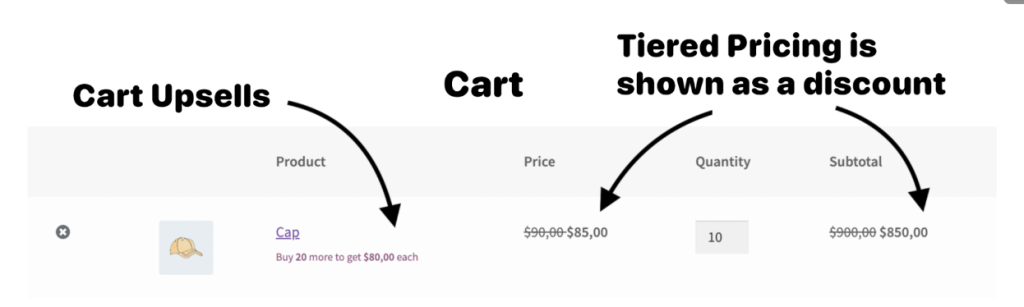
When a product with tiered pricing is added to the cart, the plugin shows the price as a
discount.
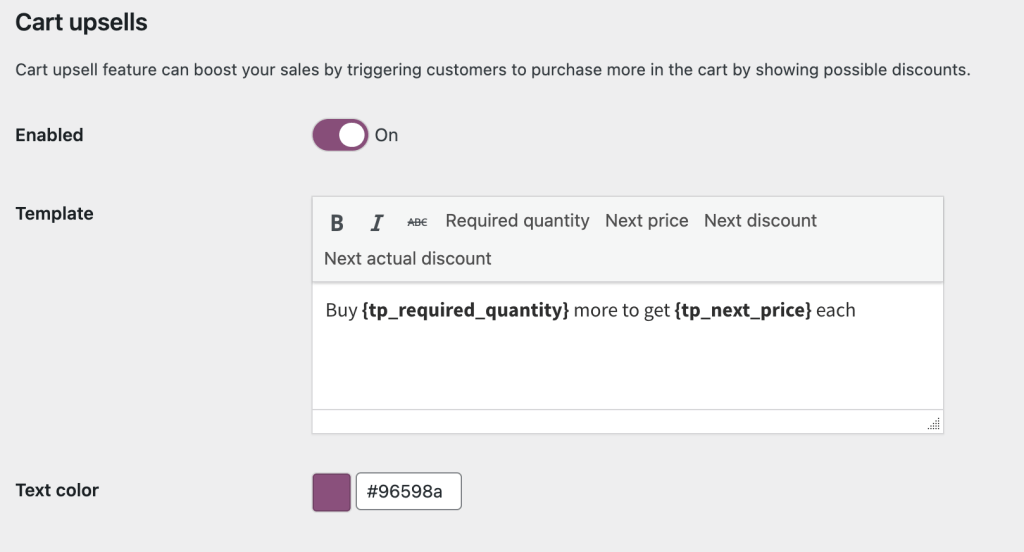
Upsells
Cart upsell motivates customers to purchase more by showing how many more they
need to add to reach the next discount level.
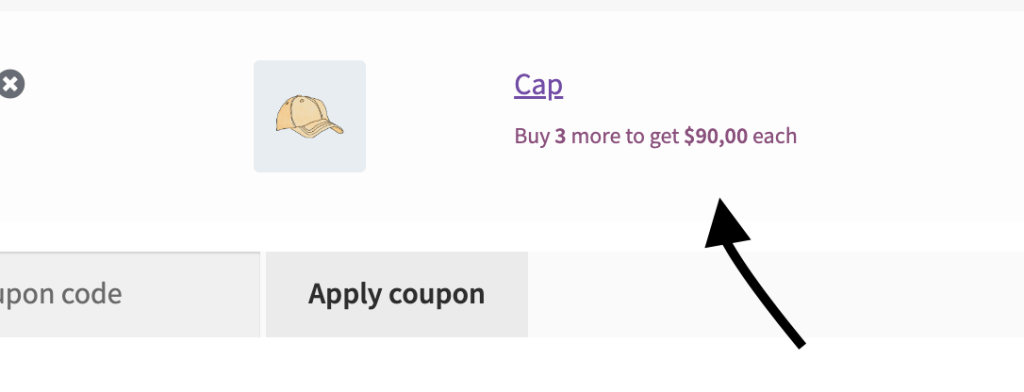
Customize the upsell text using variables: {{required_quantity}},
{{next_price}}, {{next_discount}},
{{next_actual_discount}}.
Import
Learn how to import tiered pricing data:
- How to import tiered pricing via the
WooCommerce import tool - How to import tiered pricing via WP All
Import
Set Up at the Product Level
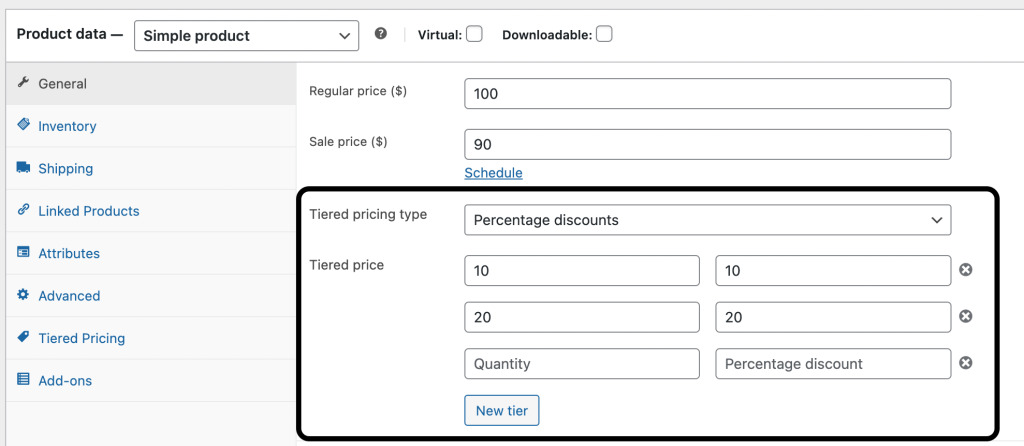
After activating the plugin, additional fields appear in the product data to set tiered pricing.
Choose a type and add tiers.
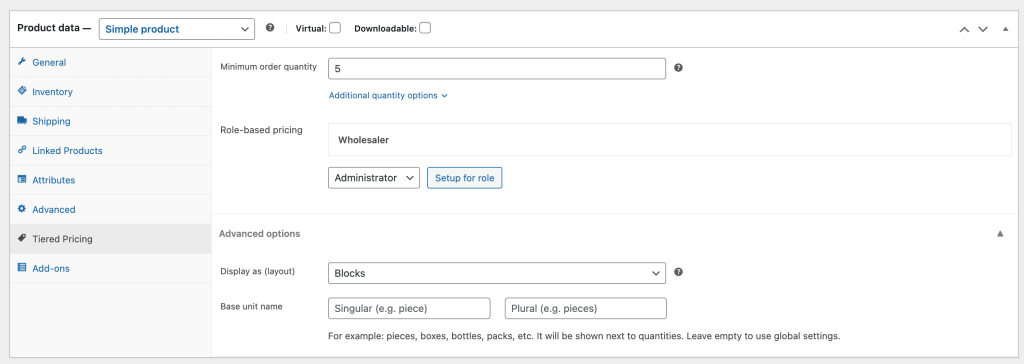
You will also see an additional “Tiered Pricing” tab with options:
Variable Product
Tiered pricing fully supports variable products. You can customize features for each variation.
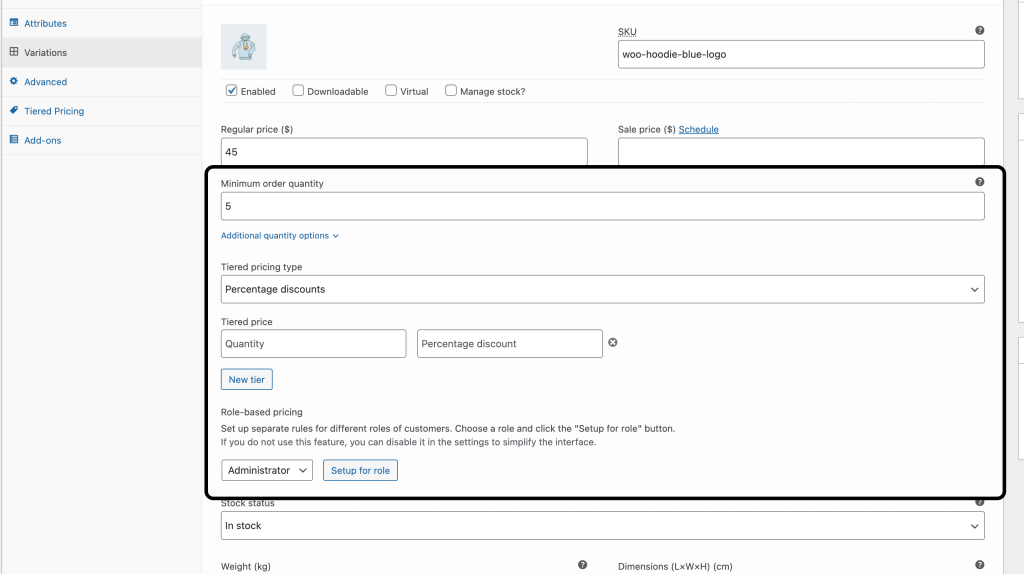
Pricing rules can also be set at the variable product level (parent), which will make every
variant inherit the rules.
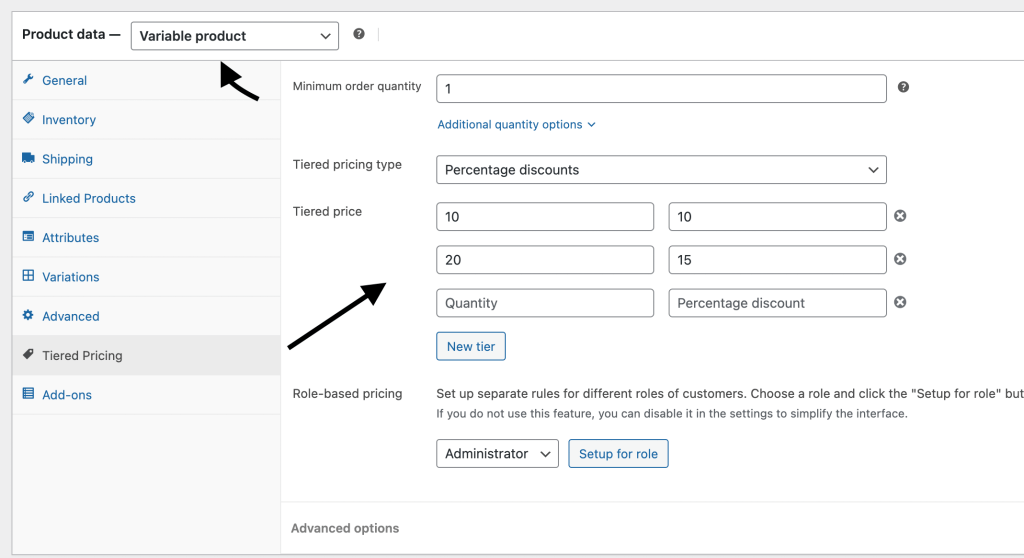
Read more about default variation behavior here.
Set Up a Global Pricing Rule
Global rules help apply the same pricing to a set of products, categories, or specific user roles.
Navigate to WooCommerce -> Pricing rules and click “Add new”.
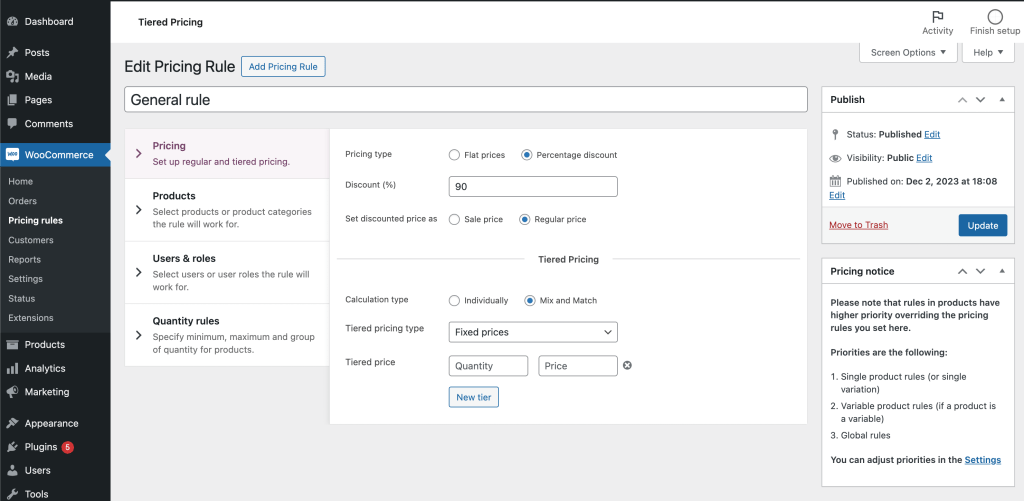
Notice
Rules in products have higher priority, overriding global
pricing rules. You can adjust priorities in the settings.
Pricing
Control regular prices (flat or percentage discount) and set up tiered pricing rules.
“Mix & Match” considers any product from this rule to calculate the tiered price
quantity (e.g., 2 of Product A + 2 of Product B = 4 total).
“Individually” calculates price based on individual product quantity.
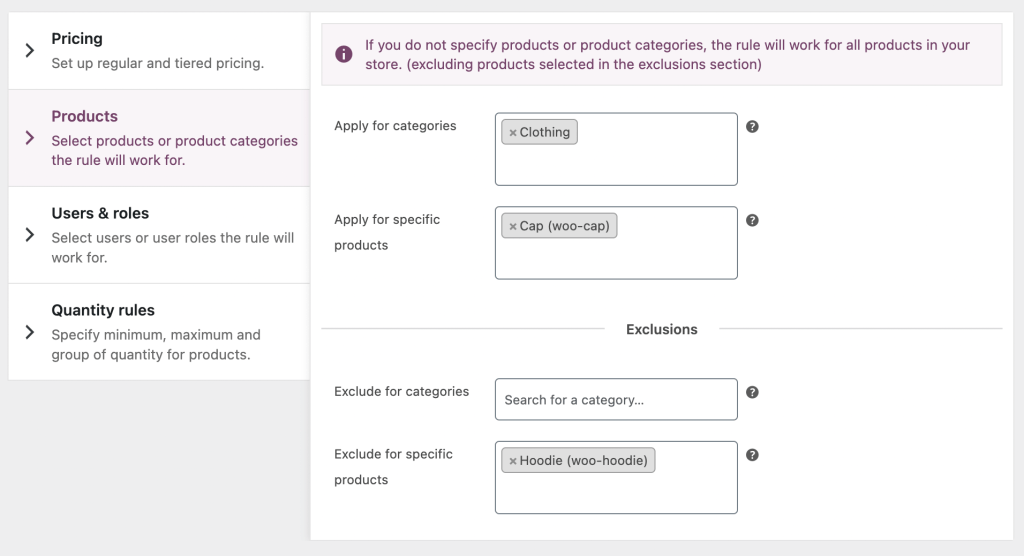
Products
Choose which products or categories apply to this rule. You can also add exceptions.
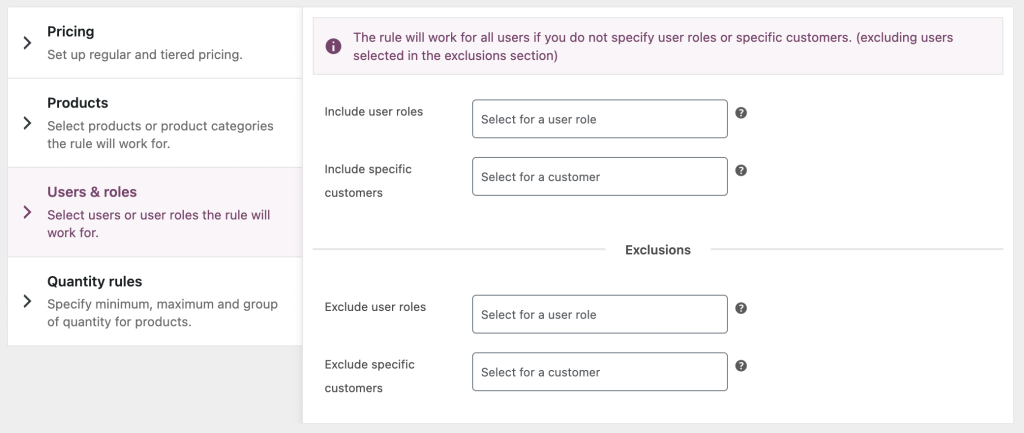
Users & Roles
Choose specific users and roles that apply to this rule.
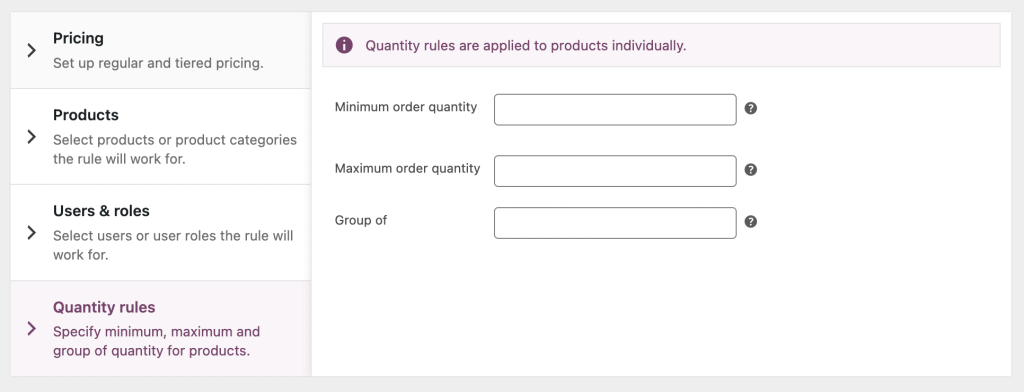
Quantity Rules
Set up minimum, maximum, or group of quantities for the rule.
Additional Features
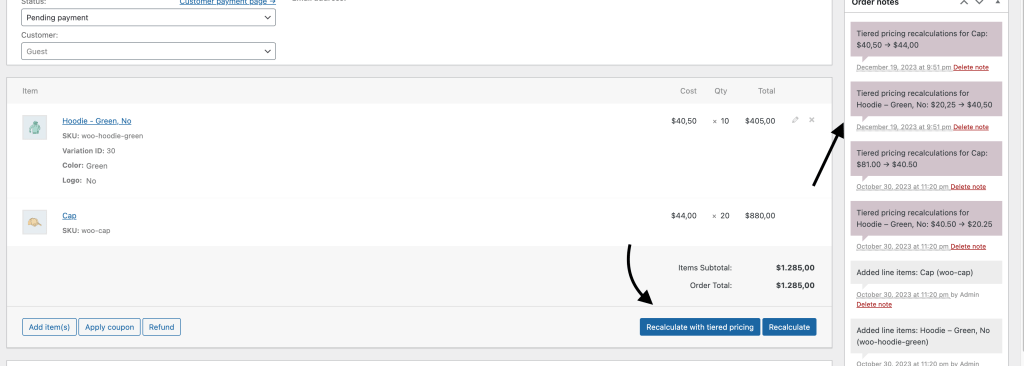
Manually Created Orders
Tiered pricing provides a button on the order page to recalculate prices based on all pricing
rules when creating orders manually.
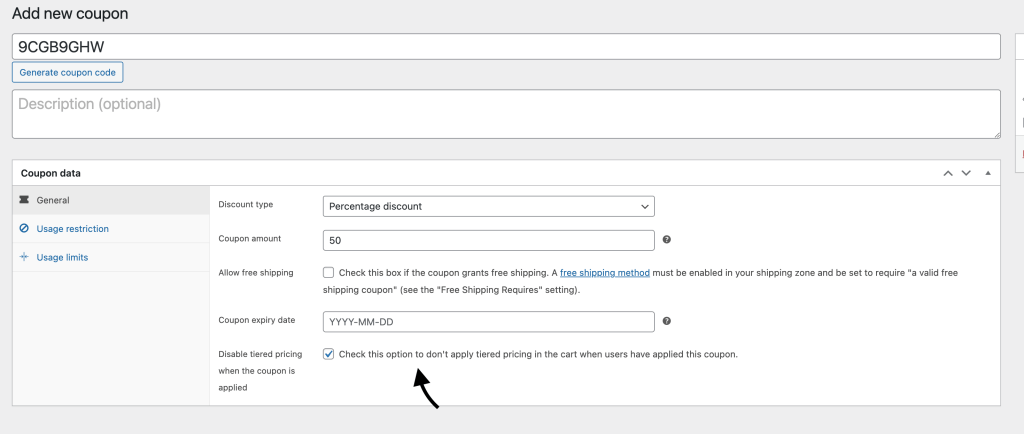
Coupons Management
Control which coupons allow tiered pricing discounts.
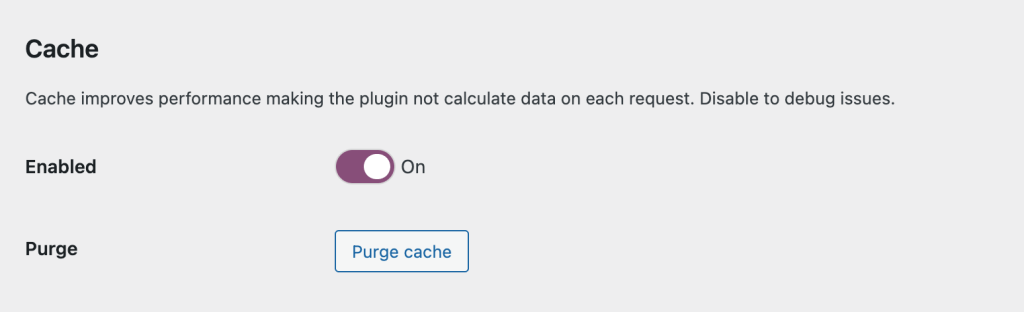
Cache
The plugin caches price calculations to ensure fast load times, especially for variable products.
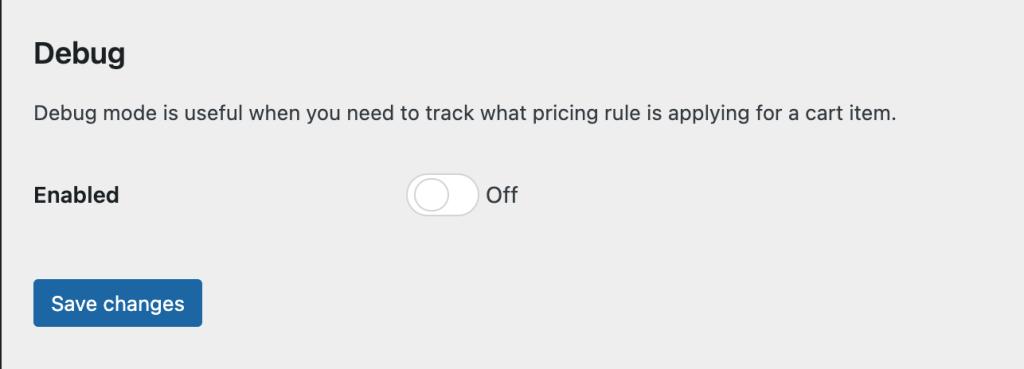
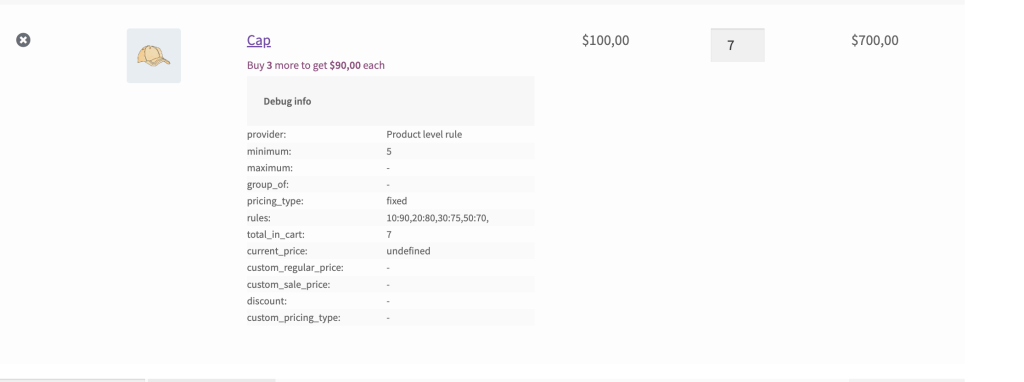
Debug Mode
Enable debug mode to see which pricing rule is applied to a specific product.
Integrations
The plugin integrates with many popular 3rd-party plugins:
- Elementor
- WPML
- WP All Import
- WooCommerce Product Addons (by WooCommerce)
- WooCommerce Custom Product Addons (WCPA)
- WooCommerce Currency Switcher (FOX)
- Aelia Multicurrency
- WooCommerce Currency Switcher by WP Experts (WCCS)
- YITH Request a Quote
- Product Bundles (by WooCommerce)
- WooCommerce Deposits (by WooCommerce)
- Mix&Match for WooCommerce